Sunday, 26 February 2023


Our Missing Hearts, by Celeste Ng.


           In an author’s note at the end of her explosive novel of racial hatred and discrimination, Celeste Ng is careful to stress that the themes she writes about are nothing new;  racism against Asian Americans is as old as immigration – The Yellow Peril lurks around every corner, as old and frightening as The Bogey Man, and when her story opens, those of mixed race are particularly vulnerable.

            Such a child is Bird, whose Chinese American mother Margaret fell in love with Ethan Gardner when they were students at Harvard.  They married and made a life for themselves in an Ivy League town;  Margaret was a published poet, and Ethan had tenure as a professor of Linguistics – and this section of the story is particularly beautiful, for Ms Ng uses language like notes of music, making gorgeous melodies as Bird’s parents educate him in the origins of stories, the meaning of words and the magic of fairy tales – until the Crisis.

            The Crisis is a world-wide economic depression which results in massive unemployment, huge, countrywide protests and a gradual belief that China, who seemed to get off lightly compared to the rest of the world, is behind the terrible reversal of U.S. fortunes.  Eventually, the government decides on a solution:  PACT.  ‘Protecting America’s Culture and Traditions.’  Which covers a multitude of behaviours that would have been unthinkable before the Crisis:  the censoring of what is taught to children in schools;  the banning of books considered inflammatory and ‘Un-American’ in libraries;  and worst of all, the removal of children from their parents, sent who-knows-where because the parents were no longer considered fit to nurture them as good little Americans.

            Such a fate is narrowly avoided for Bird when his mother decides to flee before she is betrayed by a neighbour or ‘friend’ (very common these days), and her loving husband is forced to denounce her to anyone who will listen so that the authorities will not remove Bird from his custody.  Because of his wife’s disgrace he has been hugely demoted and now earns a pittance shelving books in the university library, but he doesn’t care, as long as he and Bird are still together, even though Bird’s oriental eyes mean he must wear sunglasses to avoid the bullies.

            But Ethan has reckoned without Bird’s natural curiosity, especially when he receives a mysterious communication by mail – a picture of cats, seemingly innocuous to the Post Office censors, but to Bird, a message from his mother after three years of silence.  She is in New York.  No matter what the danger, he must travel there to see her.  To find out why she left him, for his father has never said.  To find out why she left him behind.

            Ms Ng’s prose is like a shower of gold coins:  in words of great beauty she writes of a terrible, dystopian society that good, rational people despair of ever repairing, especially (as she has already said) what has occurred in the novel has already happened in real life.  Every thinking person should read this book.  SIX STARS.


Thursday, 16 February 2023


Playing Under the Piano, by Hugh Bonneville.       Non-fiction.


            The only people who haven’t heard of the smash-hit TV series (with two full-length movies also snaring huge box-office returns) ‘Downton Abbey’, must be a lost tribe of the Amazon.  Seldom has a between-the-wars tale of British Aristocracy, complete with love between the classes, scandal, heartache and tragedy been so successfully brought to the screen, and universally loved by millions – of all classes.  And apart from being the wonderful scripts of Julian Fellowes, it fell to the perfectly-cast actors to cement the reality of their screen lives indelibly with viewers in every episode:  who hasn’t heaved a sigh of frustration at the thought of having to wait a whole week to find out the fate of Lady Mary or Lady Edith, or their darling little sister, who dies in childbirth, the child being the daughter of the chauffeur!

            And now we are fortunate to have a charming memoir written by Hugh Bonneville, who plays the aristocratic father of those three gels and, true to form, explains that no-one, least of all the cast, could predict the runaway popularity of the show but, needless to say, everyone was predictably delighted to have long-term work, for regardless of reputation, an actor’s life will never be 9-to-5, every week until they retire.

            Mr Bonneville is a very funny man.  And a wonderful writer, especially as he recounts his early years as a trainee Shakespearean  actor, along with such other hopefuls as Ralph Fiennes, receiving an excellent grounding in the classic plays of British literature at elite theatres - after attending Cambridge University with a half-hearted wish to study law, or Religion with a view to becoming a minister.  Yes, truly!  Our hero was a man without a clear mission until he caught the acting bug, and lucky for us that he did, for he has appeared in some memorable plays and films, all of which are entertainingly covered here, including ‘Notting Hill’ and the charming Paddington Bear films.  He shares wonderful memories of the luminaries he has worked with (and they are Legion), with never an unkind word from or for anybody, yet still imparting cosy, gossipy, charming little anecdotes that humanise such greats as Dames Judi Dench and Maggie Smith, both of whom left him ‘awestruck’. 

            He explains the ‘mechanics’ of acting that allow the actor through his expertise –sleight-of-hand? – to lull the audience into thinking that every move and direction is natural, unforced on stage or before the cameras:  acting is indeed a precise and suble art, and Hugh Bonneville, once so unknown that ‘he couldn’t get a table at MacDonalds’ is now a literary luminary, as well as an acting one.  Big Macs, anyone?  SIX STARS.         

Wednesday, 8 February 2023


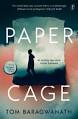
Paper Cage, by Tom Baragwanath.


            Tom Baragwanath’s debut novel is notable for several things:  it is the recipient of the Michael Gifkins prize;  it’s a fast-paced, satisfying thriller that follows all the good crime-story rules – non-stop action, credible characters, and more twists and turns than a pretzel as we move towards WhoDunnit;  and it’s set primarily in the Wairarapa town of Masterton, on the East coast of New Zealand’s North Island – which is bound to give all Kiwi readers a very satisfying buzz of recognition.

            Lorraine Henry narrates the story;  she is a pakeha (European) woman whose life has been blighted by much tragedy.  She has lost almost everyone she holds dear through a series of tragic accidents – except for her beloved niece Sheena, daughter of her late sister, and the apple of her eye, Bradley, Sheena’s little son to Keith, the head of a Mongrel-Mob gang chapter in the town.  Lorraine always worries about Sheena’s association with Keith, for he runs the local Meth business and apart from the huge illegality of his ‘business’, Lorraine fears for Sheena’s will-power around all that poison, not to mention Bradley’s exposure to it and, because of Lorraine’s long-time job as a file clerk at the local police station, the hostility she always faces from Keith whenever she visits.  Which is often;  they don’t live far away.  And she loves them – they are her reason for getting up in the morning.

            And one can never be too vigilant at the moment because Precious Kingi, a young Maori girl has vanished from her home in the nearby town of Featherston;  she comes from a deprived background and her dad is also mixed up in the Meth business – some would say ‘Well, what would you expect?’ but Lorraine grieves for her parents, whom she knows:  how can they bear it?  And the cops don’t seem to be doing anything much about it – until a second Maori child disappears, then a Wellington detective finally turns up from the Big Smoke, one who specialises in the disappearance of children – and wondrously, he thinks that Lorraine’s experience and photographic memory of the criminal files in the basement might be more useful than the Mr Plod tactics of the Police Chief.  Especially when Lorraine’s worst nightmares are realised and Bradley goes missing.

            As if the suspense isn’t wound tight enough, Tom Baragwanath ratchets up the pace some more with two murders and a villain who thinks he is acting with the best of intentions. Most intriguingly, the lines between good and evil become somewhat blurred.  There are no winners in this raw, clever story.  FIVE STARS.


Tuesday, 31 January 2023


Less is Lost, by Andrew Sean Greer.


            It is an infinite pleasure to welcome back Arthur Less, hapless hero of ‘Less’, Andrew Sean Greer’s 2018 Pulitzer Prize-winning novel.  He hasn’t changed much;  he’s still a minor American novelist;  he’s still shy and blushes easily, confidence a fleeting visitor in his life and work, but!  He is still with his great love, Freddie Palu, living in the tiny house of his famous poet ex-lover (recently deceased) in San Francisco – but.

            For a number of obscure reasons, Arthur is unsure of Freddie’s devotion, especially as Freddie, a high school teacher, has removed himself to Maine on a three-month sabbatical, taking a university course in narrative form.  Arthur plans to join Freddie as soon as possible, and make a start on his next novel.  It’s no fun living alone in their hilly little eyrie, and having to attend the ex’s last rites with the ex’s widow Marian who, after years of hating him for stealing her husband, now relies on him to be her emotional and physical support at the great man’s funeral.  Life is full of ironies, big and small.  And bombshells delivered by Marian, in the shape of monies owed by Less for the aforesaid Eyrie – for which he has paid no rent of any kind for at least ten years – and a time limit of one month in which he has to find the money ‘so that the will can be probated, then the Eyrie will be his’.  When the news is relayed to Freddie, he is aghast:  how can someone never think to question whether he owes rent?  ‘The subject never came up,’ says Arthur uncomfortably.  Even he sees that this is taking trust too far.

Strong action must be taken:  no trip to Maine to see outraged Freddie – he must go on the Southern speaking tour and the PrizeGiving Committee that his agent has commanded he attend, and oversee in Savannah the turning into a musical (!) of one of his short stories about his boyhood:  if he slogs his way through this Southern Odyssey, he will have earned enough to clear the debt.

And here Mr Greer has a wonderful time – and so do we! -  with Arthur’s adventures in his borrowed van which, the farther South he travels, seem to call for ever more U.S. flags and bumper stickers (he even wears a cap and grows – not very well – a beard), but never seems able to disguise his gayness, for he is always asked ‘are you Dutch?’  But faint heart never won Fair Freddie, and Less, fired by love, has the stoutest heart of all.  His quest is laugh-out-loud funny, and Greer’s wonderful facility with language is a perpetual pleasure, for Less will always be more than the sum of his parts.  FIVE STARS.    


Wednesday, 18 January 2023


The Axeman’s Carnival, by Catherine Chidgey.


            ‘The Axeman’s Carnival’ tells a story which may be all too familiar to some:  marital violence perpetrated for distressingly common reasons:  a livelihood going down the tubes;  jealousy;  loss of control (‘I’m sorry!  I’m sorry!  It’ll never happen again!’) when the guilty one has had ‘a skinful’, and a gradual build-up of resentment and rage so that each destructive episode repeats itself sooner or later in varying degrees of cruelty.

            Catherine Chidgey doesn’t spare the reader as she describes the lives of Rob and Marnie who farm sheep on a high country station in Otago.  Rob’s family have owned the farm for generations, but it is losing money steadily, regardless of Rob’s 24/7 efforts to keep it afloat – no wonder he loses control and hits the missus sometimes when he’s had a few;  she has no idea the pressure he’s under!  Women are pretty clueless all round, really, and look what she’s done – brought home a bloody magpie that’s fallen out of its nest:  it’s just a hatchling, it’ll never survive (it certainly won’t if Rob’s got anything to do with it!) and she should be out working instead of teaching it words.  Bloody women!  Just because she lost a baby last year she’s gone all clucky.  It wasn’t really a baby anyway, and Rob couldn’t help punching her – not his fault she had a miscarriage!

            Poor, anxious Marnie manages to stand firm, however, in her determination to keep her little Magpie whom she baptises Tama, short for Tamagotchi, but also Maori for boy or son, and Tama, who narrates this beautiful, terrible story is well aware of the poisonous atmosphere in that creaky, rotting old farmhouse, of the nine golden axes hanging above the marital bed, and Rob’s overwhelming desire to win a tenth at the next Axeman’s Carnival, sealing his reputation as the best Axeman ever.

            Ironically, Tama’s facility for language – he can imitate perfectly every human word with ease – earns him a huge following on Twitter, thanks to Marnie thinking he would look cute in a selfie or two;  in fact he becomes, thanks to his internet following and eventual clever marketing, the saviour of the family finances.  Rob will have to eat his words and curb his impulses.  But can he, especially with his jealousy running rampant and a skinful consumed at the Axeman’s Carnival?

            Ms Chidgey has excelled herself:  in beautiful, lyrical language she tells a savage story of Man the Wrecker against the Environment, elemental and capricious, always battling each other.  Who will win, and at what cost?  And what happens to Rob, Marnie and the unbelievably intelligent and hilarious Tama?  There’s only one way to find out – be the happy captive of this mighty story.  SIX STARS.

Monday, 16 January 2023

What's Tops for 2022?


WHAT’S TOPS FOR 2022! 

(Even though we have started 2023).  Late again, BUT!  Better late than never, so there.  I have read some wonderful stories this year, and here are the really super-stand-out titles (in no particular order) that thrilled me to the marrow in 2022 – and we’ll all have to admit that there wasn’t much else about the year just gone that was uplifting, heartwarming and optimistic, except the marvelous escapism of great fiction.  Let’s get started:


The Hungry and the Fat, byTimur Vermes


Never, by Ken Follett


Crossroads, by Jonathan Franzen


We Are Not Like Them, by Christine Pride and Jo Piazza


Greta and Valdin, by Rebecca K. Riley (NZ fiction)


City of Ice, by Brian Klingborg


The Fish, by Lloyd Jones (NZ fiction)


Harbouring, by Jenny Pattrick (NZ fiction)


Legendborn, by Tracy Deonn  (Young Adults)


Again, Rachel by Marian Keyes


Vine Street, by Dominic Nolan


Managing Expectations, by Minnie Driver  (Non-fiction)


City on Fire, by Don Winslow


These Days, by Lucy Caldwell

 Have a safe and healthy 2023, everyone, and happy, happy reading!  

Thursday, 5 January 2023


Demon Copperhead, by Barbara Kingsolver.


            Demon Copperhead is the nickname of narrator Damon Fields, child of a young man who died before Damon’s’ birth, and a girl who was too young for motherhood and entirely without family of any kind to support her.  Alcohol became her crutch.  He also has the misfortune to be born in Appalachia, ‘hill-billy’ country, one of the poorest, most exploited parts of the States bordering the Mason-Dixon Line, where Mining is the only work on offer and those offering it have complete power – over everyone.  In short, the Great American Dream is a nightmare for the ordinary folk Damon grows up with.

            But!  He is best friends with Maggot, his name for Matthew Peggot, who lives next door, and Maggot’s family has taken him to their hearts, which is just as well for, though she loves him, Damon’s mum cannot be relied on, especially when she goes on a bender;  then the boot is usually on the other foot:  Damon becomes, of necessity, a care-giver from a very early age.  Which is not to say that he’s any more deprived than any other of his schoolmates;  everyone puddles along, various parents in rehab of some kind, depending on their addictions – until twin tragedies occur:  opioids in the shape of oxycodone and fentanyl make their first appearances, and Damon’s mum meets her fate in the shape of Stoner, a fast guy with a motorcycle, a steady, well-paying job – and a loathing for Damon. 

            It is patently clear that this is not a marriage made in heaven.  In short order Damon is made an orphan and  abandoned to the inept local welfare system where he is subjected to the whims and vagaries of people who have applied to foster him, but only want the monthly allowance the State pays them to ‘look after’ him.  At the age of ten, he has become just a number, living in squalor and worked into the ground at one place, and barely fed in another.  This part of Damon’s narrative is purposely reminiscent of Dickens’s David Copperfield, for Ms Kingsolver wants it known that not a lot has changed between modern-day Appalachia and British Victorian times, just the anaesthesia that people use (including, eventually, Damon) to block out heart-ache, sadness and hunger for increasingly shorter periods.

            Ms Kingsolver was born, raised and lives in Appalachia, and there is no writer more uniquely and superbly qualified to write Damon’s powerful story, which is both a tribute to the country’s beauty and an elegy to its cruel mismanagement.  In God We Trust means nothing where Money is the only God.  Having said that, let us thank whatever deity gave us the pleasure of Ms Kingsolver’s singular literary voice:  how lucky we are to hear it.  SIX STARS.