Sunday, 10 December 2023


A Better Place by Stephen Daisley.


            This is the third of Stephen Daisley’s novels that I have read and once again, I am in awe of his seemingly effortless talent to evoke myriad emotions from the reader as they journey through his characters’ lives, completely involved and living each experience, good or bad, with them – and there are so many searing, tragic experiences, for Stephen Daisley writes about war, and he doesn’t pretty it up for the reader:  in spare, short sentences he tells the story of twin brothers from New Plymouth in New Zealand’s North Island who, at the age of twenty enlist in the Army at the beginning of the Second World War.

            Roy and Tony Mitchell are jacks-of-all-trades.  They are identical twins, but Tony is an idealist and artistic.  Roy is relentlessly practical:  what you see is what you get.

They have had a rough start to life:  their father was given land by the government when he came back from the First World War but he also came back broken and turned to the drink.  Their mother left them to fend for themselves without a backward glance when they were fourteen.  She’d had enough.  After working for keep and learning stock handling, fencing and all the other backbreaking toil associated with hard-scrabble farming, the twins decide it’s time for a change:  might as well go to war!

            So they do, and end up at Maleme on the island of Crete with their Battalion, retreating from a huge German Offensive in which Tony the Introvert is believed lost.  Bloody good Joker Roy is understandably shattered, but he feels even worse because he ran away like a coward, leaving his brother behind, and when he returned, could only find Tony’s leg, shattered and shredded at the listening post where he left him.

            The fate of both brothers is masterfully revealed;  Roy is shipped to Italy with his regiment, and Tony becomes a Prisoner of War.  He is shown  compassion by his captors, while Roy sees the worst side of the enemy:  a whole village annihilated as the Allied troops came to liberate them:  the feelings of the hapless reader (me!) are trampled into the ground;  this is how it was, and this powerful, terrible story should – but won’t – act as a terrible, sickening example of what war does to the world, how long it takes for nations to recover, and the tragic fact, as evidenced by the Ukraine and Gaza, that nobody learns War’s lessons.  SIX STARS.    

Thursday, 30 November 2023


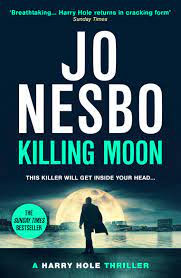
Killing Moon, by Jo Nesbo.


            Harry Hole.  Ah, Harry Hole, Jo Nesbo’s brilliant alcoholic Norwegian detective, adept at solving the heinous crimes of serial-killers, but just about done-for by the time this story starts.  Harry is in Los Angeles, determined to drink himself to death or, when his money runs out, to finish everything off by his own hand – and gun.  To join his beloved Rakel, cruelly murdered by a friend who wanted the ultimate revenge – but fate (or karma) has other plans for Harry:  he rescues an elderly lady from death by her creditors, but there’s a time limit on their generosity:  he has a week to find nearly a million dollars, or Lucille, whose kindness to Harry has been legendary, gets a bullet.

     Coincidentally, he receives a call from Oslo with a job offer:  working as a private detective to prove the innocence of a multi-millionaire who is facing murder charges after the bodies of two young women were found within a week of each other, the second one beheaded.  Suspicion has fallen on the millionaire because they were both guests at a lavish cocaine-addled party he threw in his penthouse on the night the first girl died and despite the fact that his wife provides an alibi for him, there is evidence that this is not the case. 

It is no easy thing to return to Oslo with all its wonderful and terrible memories – and all the familiar drinking holes, not to mention all the colourful characters from Harry’s past, including his former police colleagues, some of whom are less than pleased to see him, but Harry is on a time limit and time is of the essence:  he knows that Markus Røed is probably innocent of the crimes with which he is charged, but he’s guilty of crimes just as destructive and believes that power and money can buy anything, including Harry Hole, who is singularly unimpressed:  just tell him the truth and show him the money.

But Markus has rampaged through his life without a thought for the people he crushed under his hand-made shoes on the way – until one of them decides to strike back, and fashions a revenge that is truly Biblical. 

And I, who pride myself on guessing whodunit from early on in the piece, was  truly tricked into thinking it was someone else entirely – I could have taken my pick of all the red herrings on offer and still came up crook, so Jo Nesbo has done it again:  given us a truly thrilling page-turner, with wonderful supporting characters and a protagonist who has endeared himself permanently to every reader to the extent that there would be an international outcry if Harry Hole did indeed decide to end it all.  SIX STARS.   

Sunday, 19 November 2023


Did I Ever Tell You This?  By Sam Neill.                               Memoir.


            New Zealand actor Sam Neill tells the reader more than once in his graceful and hugely entertaining memoir that he is ‘a jobbing actor’:  he will say that he does it to feed himself and his family, about whom he is always loving and touchingly proud.  It soon becomes obvious to the reader, however, that while he has more than earned enough to put food on the table for family generations to come, he has also gained a world-wide reputation as a celebrated actor in a myriad different roles, from battling dinosaurs in the Jurassic Park movies to dazzling 17th century London as King Charles the Second.

            And he is also battling cancer.

            About which he writes baldly and bravely, with no trace of the ‘Poor-Me’s’, an indication of his upbringing in a loving but no-nonsense family.  Sam, baptised Nigel to his eternal regret after his birth in Ireland, was the second son of a New Zealand military officer  (‘your father,’ says an aunt in pointed reference to Sam. ‘Now he was a handsome man.’)  As proven by an absolutely stunning photo of Sam’s dad.  Sam’s mum was an equally photogenic young Englishwoman and, after producing daughter Juliet, the family eventually moved to Dunedin after a wonderful, wild start in Ireland, and Sam was despatched to the delights of boarding school in Christchurch.  Whether he wanted to go or not – ‘nothing wrong with a Boarding-School education, it’ll do you good!’ Or not.  As Sam was more academically inclined than sporty (he loved acting, surprise surprise!) he wasn’t regarded with great interest by his teachers. But.

            Fate intervenes, when after university Sam gets a job with the National Film Unit (‘New Zealand’s least cool film makers’) and he is eventually cast in ‘Sleeping Dogs’, a pioneering feature movie that interested people in Australia, and  was the start of His Brilliant Career.  Sam and the camera fell in love and have been thicker than thieves ever since.  Only his family is more well-loved than acting – and wine-making:  thanks to his superior ‘jobbing’ talents, Sam is also a vintner of some note – the Pinot Noir produced at Sam’s South Island Two Paddocks vineyard has an international reputation:  not bad for a weedy little kid called Nigel – who changed his name to Sam when he was small because all the best guys in cowboy movies were called Sam.

            The last word shall go to Sam’s little daughter Elena who visited him in his trailer when he was upholstered magnificently in his royal raiment as King Charles the Second:  Sam was waiting for her cries of admiration but all Elena could say was ‘but Daddy, where are the Dinosaurs?’ This was the perfect way to end a lovely book written by a gentleman, and a gentle man.  SIX STARS.       

Saturday, 4 November 2023


Night Will Find You, by Julia Heaberlin.


          Vivvy Bouchet has had a number of disadvantages in her life as she grew up, not least being the daughter of a Psychic who gives readings true and false in an effort to support Vivvy and her elder sister Brigid;  they sometimes have to leave town in a hurry – especially when the body of a dead woman is exhumed in their back yard which their Mum claims to have foreseen:  this event signifies a big increase in income, but removes permanently any privacy they had growing up.  A shift to the Lone Star State of Texas, proud home of myriad conspiracy theorists and gun-toting Trumpsters is not the safe haven it could have been, and reaching adulthood for both girls is something of a triumph – especially as Vivvy has managed to achieve her childhood goal of becoming a respected scientist – an astrophysicist, no less, the pride of her small family.  There’s just a couple of things wrong with that rosy picture:  Vivvy is obsessive-compulsive, and she has inherited her mother’s doubtful gift of second sight.

            A very odd combination of a relentlessly factual scientific mind married to an equally unassailable group of ‘feelings’.  For that reason Vivvy works alone on her exploratory Space studies, supported by a prestigious university grant – until her brother-in-law Mike, a detective, asks for her psychic help with a group of photos he wants her to see:  could any of the subjects be still alive?  If they are dead, any vibes as to where their bodies are?

            Well.  Mike must be desperate if he is asking for her help, but he can’t ask his mother-in-law – she has recently died of natural causes, so Vivvy is the next-best thing.  And she proves her worth:  a three-year old girl who disappeared from her home eleven years ago is not dead, despite her mother being jailed for her ‘murder’.  She’s alive – but where?

            Julia Heaberlin has written a marvellous thriller – not just superior plotting and characters, but her ruthless honesty in depicting today’s America, that land of endless opportunity bogged down with misinformation, disinformation, climate deniers, and the podcasters and newscasters frothing at the mouth to spread more fantasies to people who want to believe – need to believe – in something, the more unbelievable, the better.  Through her heroic character Vivvy she lays bare illnesses that infect a proud country, in the meantime giving us, in the best thriller tradition, shock after shock as exposes bad guys we never suspected, and a glimpse of a MAGA world we’d rather not see. SIX STARS. 

Thursday, 26 October 2023


Kala, by Colin Walsh.


            Colin Walsh has already made his reputation as a prize-winning short-story writer:  this is his first novel and he may cover all the bases of a competent thriller, but it takes an extraordinary talent to elevate efficiency to brilliance, and Colin Walsh has it in spades.

            The reader is spared no mercy as we are subjected to every good, bad and ugly emotion throughout this story of solid teenage friendship that has disintegrated into reluctant acquaintance fifteen years after the disappearance of Kala Lanann, the heart and soul of the little group.  Her boyfriend Joe is now a famous rock star;  her best friend Helen has returned to Ireland from Canada to attend her father’s forthcoming wedding to Pauline Lyons, mother of Aidan, Joe’s mate and drummer in their little rock band, and Mush – Mush is Aidan’s cousin, horribly scarred and doomed to be his Mam’s assistant in their Cafe in the tourist town of Kinlough till death do them part.  Kala’s staunch-to-the-death friends haven’t survived well without her, and no-one – NO-ONE, wants to revisit the last time they saw her:  each of them know that they could have behaved differently.  Kala was in trouble;  she needed them, and they let her down.

            But her body has never been found, so that should surely mean something, especially to her poor, wheelchair-bound  grandmother with whom she lived – until her bones are discovered on a local building site in a gym bag.  Her badly broken skull is on top of the bag, with a photo of two young girls positioned beneath.  Are they the next targets?  And why was Kala, a vital, fearless, talented 15 year-old murdered?  What did she know or discover to cause her horrible death, and could her friends have prevented it?

            The nature of friendship casual or deep is relentlessly explored in this searing exposé of the corrupt underbelly of a seemingly prosperous and scenic Irish seaside town:  the police control law and order – but who controls the police?  To their consternation, the broken, wounded adult versions of Kala’s much-loved friends discover that everything has its price and for some, it is too high to pay.

            With this outstanding debut novel, Colin Walsh proves that he can carry on admirably the great literary tradition of Irish storytelling:  it’s all wonderful craic and I can’t wait for the next example of his brilliance. Will he make me laugh and cry again, and recoil in horror at the cruelty his characters visit upon each other?  I shall be waiting because I must, but I hope he doesn’t go on his holidays!  SIX STARS.


Sunday, 15 October 2023


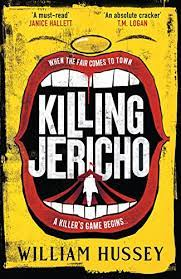
Killing Jericho, by William Hussey.


            How many Crime novels have you read where the protagonist is a burnt-out investigator, near the end of his tether but with still-enviable skills at detecting and smelling rats of all kinds?  William Hussey’s main man Scott Jericho is all of these things, but he’s also of a different stripe:  he’s a Traveller – a Pikey, a Gypo, part of the travelling fairs of Gypsies who still visit different locations in Britain – and he’s gay.

            He also won a scholarship to Oxford, experienced contempt from every class of student because he was a traveller, and found love with a fellow student, Harry Wainhouse, who was the one ray of sunshine in his bleak, unlovely life.  Naturally, with his luck, everything eventually becomes unstuck, especially his precious relationship, and after a time of booze, pills and doubtful employment in ‘security’ he eventually finds salvation of a sort:  as a policeman, causing great consternation to his travelling family, who don’t take kindly to coppers, who have never taken their side, even when they should!

            His mentor is a Detective Inspector Garris who sees great promise in Scott’s cleverly deductive reasoning of various crims and crimes, and for a time Scott Jericho is almost happy in his work, until a particularly hideous crime involving the burning to death of three small children causes him to snap and try to beat the perpetrator to death.  His punishment is severe, with a degrading jail term and damages awarded to the perp:  when he is released he is ready to die;  his life means nothing any more – until his old mentor Garris needs his thoughts on a case which appears to mirror an awful historic event concerning his own travelling family:  three people have already died in dreadful copy-cat killings of a tragic event that occurred one hundred and fifty years before.  Nothing accidental or suspicious – all bloodthirsty murders, every one.  Scott cannot resist his good friend’s plea.  He will help if he can and all he can:  it’s time to come back to the world again.

            Except that the more he delves into the crimes, the worse they become, and will he solve the myriad puzzles they present with every turn, or will he become another victim?

            William Hussey comes from a travelling background and knows whereof he speaks;  he has created a very plausible, flawed hero (who does get the guy at the end!), and there will be more Jericho novels to come.  I wouldn’t bet the farm on it, but I’m pretty sure you won’t figure out Whodunnit until that fact is revealed, and you’ll have to keep reading the series (as I will) to find out if the monster is finally bought to justice.  FOUR STARS.

Sunday, 8 October 2023


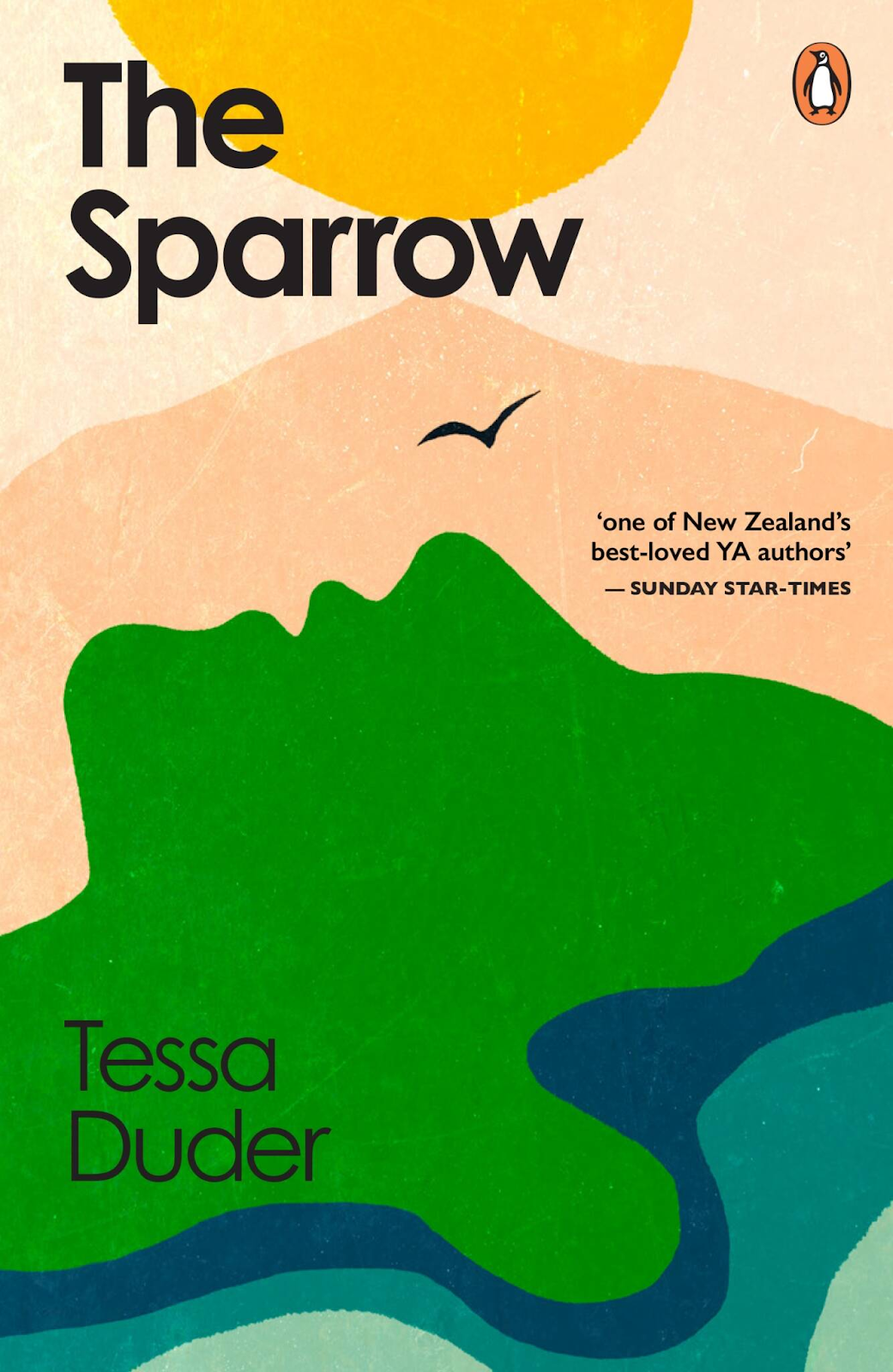
The Sparrow, by Tessa Duder.                Young Adults


            Auckland writer Tessa Duder dedicates this book ‘to the memory of the women and girls cruelly and unjustly convicted, transported and imprisoned 12,000 miles from their homeland, to those who died and those who, against all odds, survived.’

            And one such survivor in 1840 is Harriet, convicted at the age of 10 of stealing an apple at a market in her Sussex home town:  she didn’t steal the apple;  her jealous older brother connived with his friend to get her arrested by the local constable for theft – that would teach her to think she was better, and better-loved by their parents who, regardless of their desperate attempts to save their little girl from her fate, were powerless to stop her being transported to Van Diemen’s Land (now Tasmania).

            As if the sea voyage weren’t horrific enough, the destination is even worse, and an attempt by Harriet to escape brings even more punishment raining on her cruelly shaved head.  She will die soon:  she knows it - except for the human kindness we all should have, shown to her by one of the jailors.  She engineers a successful escape for a little girl whom she feels is not destined to die in such a hellhole and Harriet, eventually disguised as Harry stows away on the very same ship that transported her to Hobart:  she’s desperate to return home to her parents, but a side trip first to New Zealand is a compulsory exercise – she can hardly go to the captain as a stowaway and demand to be taken back to England.  But once more she meets kindness in the shape of an Irish seaman who discovers her hiding place and provides her with food and advice – lots of it, to the effect that when she arrives in Auckland, her boy’s disguise complete, she has no problem becoming a messenger boy and earning coins from all the Big-Wigs who have arrived to establish Auckland as the new capital of New Zealand.

            Along with material for a 16-room mansion for the new Governor, the class system has been imported, too – there are clear guidelines as to where everyone should settle:  manual workers at Mechanics Bay, Officials at Official Bay, and business people at Commercial Bay.  And everyone in their little tent villages is supplied with food and vegetables by ‘the natives’.  Who are not to be trusted.  Just because.  They are brown, have tattoos, are half-naked, and don’t speak English.  Never mind that they provide most of the food the settlers eat – that’s immaterial.  They are not to be trusted.

            Ms Duder’s account of our early years as a nation is ruthlessly honest and uncompromising, and she has created in Harriet the same qualities, along with courage and resourcefulness.  This story was a pleasure to read.  SIX STARS.