Sunday, 18 August 2013

MORE GREAT READS FOR AUGUST, 2013
The Red Road, by Denise Mina

Ms Mina is justly renowned for her gritty and disturbing thrillers (see September 2012 review below) set in the stark confines of the city of Glasgow, and ‘The Red Road’ continues in the same vein:  Detective inspector Alex Morrow is Ms Mina’s White Knight in an unremittingly grey world, and once again she is battling – vainly, it seems, to make a significant wound to the belly of the criminal world of which her brother Danny is a kingpin.  Danny who tricked her, exploiting her yearning for family into ignoring her intuition sufficiently enough to nominate him as her twins’ godfather, yet another layer of respectability he constructs in his attempts to hide his activities from law enforcers: who better to have on your side than a high-ranking policewoman who is also your sister?
DI Morrow’s lot is not a happy one and is further complicated by the puzzling death of a respected lawyer who seemingly collapsed both lungs in a fall;  the resurrection of a 15 year-old murder for which a 14 year-old girl served a prison sentence – defended by the late lawyer;  and yet another murder committed on the same night (the night Princess Diana died) of a teenage boy.  His young brother was found guilty, but information has just surfaced that shows that the evidence and his ‘confession’ were manufactured – by the police.
Yet more killings are uncovered, and with them corruption so deep that Alex feels as if she is drowning in it:  whichever decision she makes will deeply affect innocent people.  If she says nothing and preserves the status quo the villains will continue on their merry way, reaping the rich rewards of their sins, and if she speaks out and exposes Glasgow’s festering underbelly yet again, more baddies are lined up to fill the shoes of those she sends away.
She speaks out.
And reaches her glass ceiling.  Her brother is caught in the net of her investigation, but because of their kinship she is not allowed to claim credit for her skill at catching him along with so many other big fish:  the praise and promotions go elsewhere.  She is forced to conclude – rightly – that she is too good at her job;  too principled, and too naïve in believing that there are others of her acquaintance who are of a similar mindset.
And we shall have to wait until the next gripping instalment to find out if Alex’s morals and self-respect remain untarnished, and if she can survive the horrors of her job without being permanently brutalised by it.
As always, Ms Mina poses many more questions in her stories than simply ‘who done what’:  she examines with great skill and insight the human frailties that assail so many of us, and the tipping points reached that turn ordinary folk into sinners.  Highly recommended.

    
Gods and Beasts, by Denise Mina

Detective Sergeant Alex Morrow is back again in this taut and clever thriller from premier crime writer Denise Mina.  Ms Mina writes of Glasgow and its mean streets and meaner inhabitants with great assurance and skill, drawing the reader effortlessly into Alex’s Jekyll and Hyde world, introducing new characters and giving the existing ones lesser or greater roles as the plot demands.
Brendan Lyons takes his 4 year-old grandson to the post office to buy Christmas stamps;  while they are standing in the queue a gunman bursts through the door to rob the place.  In an act of tremendous bravery, Brendan passes his grandson to the person behind him (‘He’s yours’) then calmly proceeds to help the robber gather the cash, but when that is accomplished, he is shot to death, riddled with bullets by the gunman.  Even more horrifying is the fact that the robber and he knew each other.
Martin Pavel is the young man charged by Brendan with the safekeeping of his precious grandson.  He is a damaged soul, (as are we all) unsure of his place in the world, an inheritor of great wealth but at a loss to know what to do with it:  DS Morrow and her partner Harris are baffled by his presence in Glasgow, and his reluctance to divulge anything about himself;  in fact, the more they delve into Martin and Brendan and his family’s past, the more confusing and labyrinthine the case becomes – especially when the name of a very well-known local politician surfaces in the course of their investigations.  But DS Morrow is nothing if not dogged, determined to weave all the loose threads into a credible pattern that she can believe in. She presses on, only to find that to her horror, information is being withheld – from within:  by her own department.
Ms Mina can evoke atmosphere and construct characters so believable that her word pictures are unforgettable and have the reader, however disquieted by her no-frills prose, calling for more:  However, having stated the obvious, I  have to say that ‘Gods and Beasts’ is a bleak story, as bleak as the Glasgow weather at Christmas time – there are no happy endings, just respite and escape from tragedy for some of the characters, and the exposure of others to the criminal and corrupt underbelly of organisations they had thought unassailable by the gangster element.  It may be the city of Glasgow is so corrupt that it is irredeemable, unable to be saved - or forsaken - ‘by those who live with self-sufficiency outside the city walls –be they Gods or Beasts’:  regardless, by the time the reader reaches the explosive conclusion of this fine story it is clear that  Alex’s problems are just beginning:  regardless, it is a great consolation to know that once again, DS Morrow has won a battle in a long, frustrating and exhausting war.  Highly recommended.

Wednesday, 14 August 2013

GREAT READS FOR AUGUST, 2013
Gone Girl, by Gillian Flynn
I had to wait a long time at our library for my turn to read ‘Gone Girl’, which is sure testament to its popularity.  And now that I have galloped to the end of the tale, I can understand why.  Ms Flynn has written a gripping, highly unpleasant psychological thriller starring two of the nastiest protagonists one could have the displeasure to meet.
Nick Dunne and Amy Elliott meet at a party in New York and become lovers.  They are both successful in a small way;  Nick is a writer for a popular magazine and Amy writes psychological quizzes for various publications.  She is also independently wealthy thanks to a series of children’s books written by her parents loosely based on her life.  Everything in their garden is beautifully rosy including their eventual marriage, until the economic chaos of 2008 brings their blissful lifestyle to a close;  they both lose their jobs and Nick, a native of Missouri, learns that his mother has terminal cancer.  His father has already succumbed to Alzheimer’s disease and frequently escapes from his nursing home, and Nick knows the burden of his parents’ care is too much to place on the shoulders of his loyal twin Margo.  It is time to go home to Carthage and take responsibility.
There is just one problem:  Amy doesn’t want to go.  She doesn’t want to leave the Centre of the Universe for Podunk City, home to failed businesses and unemployed hopeless cases, losers and drug addicts, just because Nick wants to look after his mother:  Maureen is not her mother – she hardly knows the woman, and as for Nick’s sister, well they don’t like each other and probably never will.  Amy makes the move with very bad grace.
And Nick’s nightmare begins.  On the day of their fifth wedding anniversary he returns home to find the house in disarray and his wife missing, and when he enlists the help of the police he is shocked to find that circumstantial clues point to himself as a suspect in her possible murder.  He becomes an object of hatred, the subject of national speculation – did he do it, or didn’t he?  Did he kill that beautiful, talented woman whose eventually recovered diary reveals her great love for him and the fact that she had started to become frightened of him – or is he a victim of a frame-up, as he comes to believe:  Amy may not be gone at all – she may be orchestrating her disappearance purely for spite.
Ms Flynn is a very clever writer.  She keeps the reader guessing all the way along, revealing with each new twist in the plot another damning fact about the two main players  - for Nick is not the blameless, put-upon spouse forced to live with an obsessive-compulsive harridan who refuses to knuckle down to domesticity and give him children.  He has shameful secrets of his own that when revealed implicate him even further in foul play.
I salute Ms Flynn’s ability to enmesh the reader so successfully in her account of the failure of a loving relationship between Amy and Nick, and their reactions when they find out that neither of them were the paragons they believed -  but what a nasty pair of players they are in a game that has no winners.  They deserve each other.  Compulsively readable.

Crime of Privilege, by Walter Walker
This is an interesting story – not the most riveting in pace and suspense, but well-crafted and intriguing because its characters are instantly recognisable, thinly disguised by other names but we all know who the Gregory family is in real life.  The nearest thing that America ever had to royalty, it is a paradox of great triumphs and terrible tragedies.
Mr Walker, a trial lawyer and eminently qualified to write a legal thriller, opens his story with a wonderful party that Senator Gregory gives in 1996 at his summer residence at Palm Beach in Florida.  George Becket is a law student and a starstruck guest, a friend of an invited friend who can’t believe his good fortune at being in the presence of such luminaries – until he witnesses the young bloods of the family sexually assault a drunken young woman in a secluded part of the mansion.  George intervenes and saves the girl from further debasement;  he helps her to clean herself up and leave the house, then tries to put the incident from his mind, leaving the party soon after:  the occasion has lost its allure.
Life continues uneventfully for the next couple of weeks – until he is visited by a man purporting to work as ‘security’ for an immensely rich developer, Josh David Powell, the father of the girl George prevented from further hurt at Senator Gregory’s party.  The young woman hasn’t come out of the experience well, will be ‘in therapy for years’ and wants to charge the Gregory boys with rape:  the security man wants George to fly to Florida, see the District Attorney and make a statement – ‘just tell the truth, son, tell the truth’ – of what occurred, but he asks him in such a way that it is clear George will suffer if he doesn’t make the trip.
And he is duly tied up in knots by the Attorney who is clearly in the pay of the Gregory family.  Power and money:  who can withstand its seduction?  Certainly not George Becket, who finds that his capitulation to the cover-up earns him good grades at law school and a cushy job as an assistant district attorney at Hyannis, another holiday playground of the Senator and his siblings.
Life should be wonderful, but he subsequently learns that Josh David Powell’s daughter has committed suicide, and there is an unsolved murder of a young woman whose body was found on a golf course close to the Gregory compound.
The girl’s father thinks George is a man of honour.  He asks him personally to re-investigate his daughter’s murder – he is confused and insulted by the patent lack of action by the local authorities and feels that the only person gathering evidence is himself – which is exactly right.  The cover-up is in full swing.
Predictably, George shuns Mr Telford, nicknamed ‘Anything New?’, the question he has been asking of the authorities since his daughter died, but he eventually finds himself between a rock and a hard place:  Josh David Powell the rock, hugely rich and powerful and thirsting for revenge for the degradation and suicide of his daughter, intent on making George’s life very uncomfortable unless he comes up with evidence beyond a reasonable doubt of Gregory crimes;  and hard place ‘Anything New’ Telford, who believes wholeheartedly in George’s honour and non-existent integrity to nail the killers of his beloved child.
‘Crime of Privilege’ is a clever reconstruction of many factual events.  It doesn’t rush the reader breathlessly from one chapter to the next but Mr Walker writes with clarity, wit and style and George is well portrayed as the man who takes the easy way out - until his conscience and long-dormant integrity finally demand otherwise.  Recommended.

WarHorse, by Michael Morpurgo           Junior fiction
Children’s author Michael Morpurgo is one of the most prolific and gifted storytellers in print.  He writes on a multitude of different subjects, and for children of all ages.  (Including me!)
Recently I reviewed his book ‘Little Manfred’ with great pleasure and now wish to do the same for ‘WarHorse’, his classic tale of the First World War, published in 1982 and subsequently dramatized on the stage, then in a fine movie directed by Steven Spielberg. 
The story of Joey, a rich red bay with four white socks and a white ‘cross’ on his forehead is told by Joey himself, three parts thoroughbred and one part farmhorse, from the time he is bought by Farmer Endicott in a drunken bid to spite someone he hated, to the time he is sold as a cavalry horse to an army captain in 1914, because the farmer needed the money - ‘ a man’s got to live’- despite the fact that his son Albert loved Joey, regarded him as his own and had trained him to pull a plough and earn his keep. Endicott’s betrayal is so underhand and shocking that Albert vows to join the army as soon as he is old enough so that he can find Joey and bring him back to England and the safety of his former life.  It is a promise he keeps, joining the Veterinary force at age 17, still in time to witness first-hand the bloodbath on the battlefields of Northern France, where terrified boys become exhausted, embittered men overnight – and horses share strange allegiances and frightening adventures, as Joey relates with vigour and poignancy.
This is a wonderful story – beautiful and terrible, an object lesson for all in the brutality and futility of war and how it deprived millions on both sides of everything they held most dear, in the end accomplishing very little.  How fortunate, though, that we have writers of the calibre of Mr Morpurgo who are unafraid to write of such things for children, for children are our future, and should know of the terrible mistakes made by their forbears.  Highly recommended.             


Saturday, 3 August 2013

VERY LAST GREAT READS FOR JULY, 2013
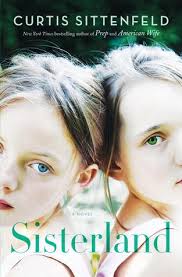
Sisterland, by Curtis Sittenfeld

Sisterland.  Population 2.  Do NOT enter without permission!

For all of their childhood, this was the sign on Daisy and Violet Schramm’s bedroom door, placed there by Violet.  They are identical twins born in St Louis, Missouri 9 minutes apart, and the shock was so great for their 23 year-old mother - who had been expecting a single child -  that she never really recovered.  Life was inexplicably cruel to have dealt her such a blow, especially after she discovered that marriage to a quiet man much older than herself was not the answer to her loneliness.
Daisy and Violet know they are different, not just because they are identical twins and therefore expected to have a special bond, but because they have ‘the senses’:  they are psychic.
For bold, brash and funny Vi being psychic is as natural to her as breathing;  why lose sleep over it?  She is the dominant personality and jeers at Daisy’s longing to be ‘normal’, to NOT know that one of their schoolmates will die before long, and to NOT be regarded as strange and a freak after the class favourite turns on her for not predicting the romantic outcome she desires.
The twins’ journey to adulthood is fraught with pitfalls;  their mother succumbs to depression and isolates herself completely from her family’s ‘otherness’;  their father, that quiet, decent man, becomes quieter still and the twins can’t wait to leave home and apply to colleges in another State.
For Daisy this means a blessed escape from everyone who knows her – she can start again, make new friends at college and experience for the first time a new, thrillingly normal life for herself.  She meets and marries a good, kind man, has two children and vows never to return to St Louis unless she absolutely has to.  Her life is complete.
Until her father, bereft after his wife’s untimely death seems to need her presence – not that he would ask.  Or is it because Vi has made a mess of her college education (dropping out after six weeks) and leads a precarious existence, seemingly having trouble taking care of herself, let alone keeping a concerned watch on their father.  Naturally, Vi thinks she managing just fine, thank you very much:  she has advertised herself as a psychic and has a sporadic clientele in between waitressing jobs.  She is also an unashamed user of her family’s generosity financial and otherwise, and Daisy knows with that sinking feeling that it is time to come home – fortunately under another name;  she is now Kate (her middle name) Tucker.  Vi has gained a huge amount of weight – the twins no longer look identical – perhaps she can remain incognito in the city of her birth.
Until Vi drops The Bomb:  she predicts that a huge earthquake will strike St. Louis on October 16th, bringing herself nationwide publicity  and throwing Kate’s dreams of anonymity into disarray.  The tremors of Vi’s prediction spread outward, engulfing all within range, not least Kate’s marriage and the security she has worked so hard to nurture:  Vi has swung a wrecking ball through everything.
Curtis Sittenfeld, author of ‘American Wife’, that excellent novel of an American Presidential couple who bear more than a passing resemblance to George and Laura Bush, has produced another winner, an examination of all the different ways that we care for other people:  the love-hate relationship of siblings;  the conscience-stricken, tiresome responsibility for an elderly parent;  and the complex, ever-changing minefield of marital relations.
Such is Ms Sittenfeld’s skill at portraying this exceptional family that she can effortlessly give the ‘ties that bind’ a compelling new dimension:  highly recommended.

Joyland, by Stephen King

Stephen King needs no introduction.  He is one of the most widely read authors on the planet and rightly so, for he has that happy knack of presenting something different and completely unexpected with each new book.
Even though he writes mainly of the supernatural – so vividly and well that it would have to be someone utterly devoid of imagination who didn’t feel the hairs rise on the back of their neck -  he still has a master storyteller’s ability to make his characters completely normal, credible, as they experience the exact opposite.
The completely normal protagonist this time is 21 year old Maine college student Devin Jones, recently abandoned by girlfriend Wendy after a two-year romance - without ever experiencing IT, though he has tried many times to engineer circumstances favourable to the happy possibility of IT happening, but no such luck:  Dev is still a virgin and faithless Wendy has bestowed IT on some other guy practically on the first date!  He is humiliated, and tries to console himself with the summer job he initially got in North Carolina to offset his college fees, that of a jack-of-all-trades in an amusement park called Joyland.
And Joyland does seem to be the ideal panacea for Dev;  he likes the work, makes friends easily and is thrilled to be rubbing shoulders with some very interesting characters, not least Madame Fortuna, alias Rozzie Gold, who tells him the story of the murder of a young woman in the Horror House four years earlier.  She also tells him there is a shadow hanging over him and to watch out for a little girl in a red hat and a young boy with a dog.  Yeah, right thinks Dev – until he meets both children under very different circumstances:  he saves the little girl from choking on a hot dog, and he meets the young boy Mike and his mother on the beach as he walks to and from his lodgings every day.  Sadly, Mike has a terminal illness and is fully aware he has little time left.  He also ‘knows’ things and has warnings of his own for Dev, though he is not sure of their significance.
Working at Joyland turns into a most unique experience for Dev:  he knows he will never again find a job where he wowed all the little kids in a ‘Howie the Hound’ suit;  where he learnt what is virtually another language, the carnival argot, colourful and often outrageous;  where he struggled dreadfully with pangs of love unrequited but made great, lasting friendships, especially the special bond he forms with Mike – and where he almost loses his life, for the Horror House has secrets, and there are those who will kill to preserve them.
Oh, it’s great stuff – literature lite for sure, but pure entertainment nevertheless:  as always, Mr King’s readers will be loath to reach the end of the tale, and that has to be the ultimate recommendation.     


Monday, 22 July 2013

EVEN MORE GREAT READS FOR JULY, 2013

Rage Against the Dying, by Becky Masterman
Brigid Quinn is fifty-nine years old.  She is a former FBI agent who took early retirement because she didn’t get along with her boss, ‘that asshole’ Roger Morrison, head of the Bureau in Tuscon Arizona, where she lives with her new husband Carlo, a retired Doctor of Philosophy and former Catholic priest.  WHAAAAAT??? 
You may well ask.  Ms Masterman makes no excuses for the oddball characters with which she populates her story:  as unlikely a good guy as Carlos seems, he is the antidote to the toxicity that Brigid ingested during her long years as a very successful agent – she’s mad about him and has been very careful not to reveal too much about her former life bringing in the baddies;  she worries that if he finds out how far she had to go to rid society of these lowlifes,  this aesthete, this paragon of goodness would find her deeply unworthy of his love - her former boyfriend (a cello-playing father of two) found her frightening in the extreme, and told her just that:  ‘I can’t have you round my children.’
So:  Brigid has been successfully evasive about details of her past and she and Carlos are enjoying their retirement and first year of marriage immensely – until an old, unsolved case comes back to haunt her;  the one case of which she is not proud.  The Route 66 murders.
Some years before, young women hitchhikers went missing on Route 66;  they were eventually found, brutally murdered  in a distinctive fashion:  their Achilles tendons were cut so that they couldn’t run, and after death one of their ears was sliced off as a souvenir. 
Brigid used to be good at disguising herself as bait for murderers, but age has caught up with her and she must train a replacement agent, one who looks deceptively young and vulnerable – as she used to. 
All goes according to plan until young agent Jessica falls into the killer’s trap and becomes a victim herself, causing utter devastation among her colleagues, particularly Brigid – she trained her, after all.  Jessica’s body is never found – until a trucker is stopped with a mummified body in his rig and a remarkable desire to confess to all the crimes.  His confession has the ring of authenticity because he knows details that were never publicly revealed, but there is something off – something that doesn’t ring true to Brigid, who has been unofficially consulted by an ambitious young FBI agent bent on growing a reputation of her own.  What could it be?  How can they shake this sick trucker’s desire to tell all in exchange for life imprisonment instead of the death penalty, especially as all the authorities are crowing with delight, thankful that they can at last close the book on seven gruesome murders.
And this is what lifts this debut novel above the usual run-of-the-mill thrillers:  a villain you never see coming;  dead ends and dry gulches galore before our gal does the business;  and a protagonist so far beyond youth and glamour that she should be a poster girl for every woman ‘of a certain age’.  Brigid Quinn has no illusions about her abilities, or otherwise:  she’s a straight arrow and finds her targets with intelligence, guile and doggedness.  Ms Masterman has created a character so smart, endearing and funny that I hope this is only the first of a series of novels about Brigid and her Holy Hubby – not to mention his twin pug dogs, given to him by his wife Jane as company for him after she died of cancer.  I ask you:  how can you resist?  Highly recommended for all dedicated thriller readers.

Donnybrook, by Frank Bill

‘Donnybrook’ is the name given to a clandestine weekend meeting in Indiana of bare-knuckle fighters competing for a huge money prize, run by the enormously rich and sadistic Bellmont McGill and his daughter Scar.  (she has none, but should:  she’s ugly.)  Brawlers from near and far pay $1000 entry fee for the doubtful privilege of getting their brains loosened and their noses knocked to the back of their heads, and to a man are fuelled to the gills with booze and meth to keep up the insane courage needed to risk their lives for $100,000, the payout for the last man standing. 
This is a tale that drips blood, gore and body fluids from every page;  Mr Bill paints a bleak and desperate picture of a part of the country where jobs have disappeared and hope has gone with them, leaving only the temporary drug-induced euphoria that masks the squalor and despair covering lives like a film of grease – oh, it’s a hard read and if this is an authentic depiction of life in some parts of today’s America, then the American Dream has become a nightmare and the Apocalypse is nigh. I do hope that the graphic detail of meth manufacture and ingestion has not been personally seen by Mr. Bill;  if he did happen upon any of the places he writes about, he was lucky to get out alive! 
There is a suitably motley cast of characters and more than enough Good Ole Boys to start an Army:  meet Jarhead Johnny Earl, who robs the local gunshop of precisely $1000 so that he can have a shot at winning the big prize.  He wants a new start with his beloved Tammy and two little ones;  siblings Angus and Liz,  ruthless meth-cookers on the run after a double murder;  Fu (this is true!) a Chinese assassin on the trail of Angus and Liz for a $20,000 debt they indirectly owe his master Mr Zhong (they murdered the man who owed the money so the debt is now theirs);  Deputy Sheriff Whalen, in pursuit of Angus for killing his nephew;  and Purcell, an old visionary whose predictions reveal themselves with chilling accuracy.
It comes as no surprise to the reader that all of these evildoers meet at the Donnybrook and the climax of this story is so predictably chaotic, violent and bloody I’m still wondering how I got through to the end of the tale in one rational piece.  I can only surmise that it’s because there are rich seams of wonderful, anarchic humour in Mr Bill’s Novel Noir and the dialogue is as down-home funny as I’ve read anywhere i.e. ‘Head-bang this made-in-China Motherf-cker, Pete!’ yells a character called Elbow, under attack from Fu.  He doesn’t survive; in fact it’s amazing that there is anyone left standing in them old Piney Woods, but from the way the story finishes there will be a sequel.  The question is:  will we all be brave enough to read it?    


Monday, 15 July 2013

MORE GREAT READS FOR JULY

The Burgess Boys, by Elizabeth Strout
Since devouring ‘Olive Kitteridge’ by Ms Strout I have been dancing on coals waiting for her latest offering, for Olive was a superb creation; she was all things to all people and Ms Strout was a worthy winner of the Pulitzer prize for that great book.
As before she reels the reader effortlessly, lovingly, and inexorably into this story of small town people trying to live big city lives –here we meet the Burgess boys, who left their Maine birthplace of Shirley Falls for better things in New York:  Jim, handsome, shrewd and bursting with charisma, on the way up the legal ladder with astonishing speed and blessed with a loving, rich wife and beautiful children who haven’t given either of them a moment’s worry.  (Truly!)  Yes, he is blessed and has plans eventually to run for political office;  all his friends are in the right places and he cannot fail.
Bob his younger brother, is not so lucky:  he too has a legal career but, unable to bear the cut and thrust of the courtroom he has engaged himself in appellate work where he doesn’t have to be in the public eye.  His marriage sadly failed because he could not give his beloved Pam children (low sperm count);  she left eventually to marry someone who could, and he now lives by himself in Brooklyn a few blocks from his glitteringly successful brother.  Bob drinks too much, sleeps too little and depends more than he should on Jim and his wife for that sense of identity and belonging that we all need.
But Jim is a bully:  he exacts a high price from Bob for a little family feeling, belittling him relentlessly whenever the mood takes him – which is often.  Bob tolerates the bad behaviour because he loves his brother, admires him and is content to lurk on his periphery – Jim has always behaved like that, so what’s new?
What’s new is that their sister Susan, Bob’s twin calls from Shirley Falls to say that her teenage son has thrown a pig’s head into the local Somali mosque.  She has been raising him since her husband left her to live in Sweden 7 years before – she doesn’t know what to do:  please help, oh (Jim), PLEASE help!
And Jim does, (Bob’s well-meaning attempts to be of help are scorned) but the assistance that Jim provides is less than ideal, and as time passes Ms Strout reveals in masterly fashion old, gnawing family secrets, tragedies unfairly shouldered, and the eventual exposure of Jim’s feet of clay.
Ms Strout writes superbly about ordinary life;  life as we all know it;  its disappointments, joys, triumphs and pain.  She is never less than convincing in her plotting and her prose is as refreshing and lovely as a cool drink on a hot day.  Highly recommended and a true pleasure to read.
And the Mountains Echoed, by Khaled Hosseini

This is Khaled Hosseini’s third novel.  He needs no introduction;  his first book, ‘The Kite Runner’ was a world-wide bestseller, beloved by millions for its wonderful characters and the lessons they learnt in familial love and loyalty.  Most of all, it was a story of Afghanistan, Mr Hosseini’s homeland, that wild, beautiful and lawless country that became for all his readers astonishingly real and immediate thanks to his superb gifts as a storyteller.
Now he enthrals us again with another tale of an Afghani family:  the same principles of family unity are espoused, but what happens when the ties that bind are threatened by poverty and death?
It is 1952.  Abdullah is ten years old and lives in the tiny village of Shadbagh with his father Saboor and father’s new wife Parmana.  Abdullah’s mother died giving birth to Pari three years ago and Saboor remarried as soon as he could to provide a new mother for his children.  Ironically, Abdullah has turned out to be the surrogate parent for his little sister;  they adore each other and are inseparable – until lack of work and the death of Parmana’s first baby from the winter cold forces Saboor to consider selling Pari in a deal arranged by his brother-in-law Nabi to Nabi’s employer in Kabul.  ‘The finger must be cut off to save the hand.’
Nabi is young, handsome and madly in love with his employer’s wife Nila Wahdati;  she is imperious, headstrong and exciting beyond belief – he would do anything to please her:  anything.  Including driving her to Shadbagh to meet his horrified family, their poverty on abject display, so that she can see Pari and decide if she wants to continue with the transaction.
She does, and a chain of events is set in motion that will reverberate for three generations, crossing continents, irrevocably shaping and altering lives:  little Pari eventually forgets she had another family;  she was only three when she was sold to the rich lady.  It is not hard to believe after a time that Nila is truly her mother.
Abdullah, devastated by his father’s betrayal, swears he will leave his hated family as soon as he can, and he does, eventually travelling to Pakistan where he meets his future wife, then on to San Francisco, where they raise a daughter – called Pari.  He never forgets his cherished little sister;  she is in his heart always, the heart that was broken when he was ten. 
As in the best stories, brother and sister do meet again, thanks to good detective work from the younger Pari and beautifully realised, convincing minor characters, but there is a gentle and sad irony to their reunion – best left for readers to find out:  I’m no spoiler!  Suffice it to say that as always, Mr Hosseini weaves his magic with consummate ease:  the reader is willingly ensnared in his beautiful imagery, the strength of the players that people his literary stage, and the truths they utter that we should all know.  Highly recommended.      


Friday, 5 July 2013

Great Reads for July, 2013

GREAT READS FOR JULY, 2013
Mission to Paris, by Alan Furst
I have been reading a lot of mediocre stuff lately, books that promised much but delivered little;  none have been (in my humble opinion) worth reviewing – some I skimmed through, and one or two I didn’t finish at all.  The above title is the best of a bad bunch.
Alan Furst’s specialty is the spy novel:  he has a well-deserved reputation as an intelligent and masterly writer of high-powered suspense stories and sets his novels during the Second World War.  His protagonists to a man are tough, kind-hearted and honourable, seeking always to follow the right path instead of one of expedience (See review of ‘Spies of the Balkans’ below).  They are heroes all, and thanks to Mr Furst’s considerable writing skills they are never caricatures.
In his latest opus, Mr Furst introduces us to Frederic Stahl, famed movie star, ordered by his Hollywood studio to Paris, ostensibly to make a film called ‘Aprés la Guerre’.
  It is 1938 and war is indeed on the horizon.  Gay Paree’s inhabitants are anything but, believing every rumour, wild or otherwise about Herr Hitler’s intentions, rumours fuelled by the hard facts related by those lucky enough to escape Germany while they still could.  Now, those emigrés who fetched up in Paris are beginning to think they didn’t flee far enough.
Frederic Stahl, because of his fame and matinée idol looks is much sought after by certain Parisian hostesses who hasten to assure him of their admiration of his talent and huge reputation, and would he like to join a society to foster continued peace between Germany and France?  His public support of their society would do much to promote friendship and goodwill between the two countries.  Let us make you an offer you can’t refuse.  And when Stahl does refuse, the pressure mounts:  it has been decided in Berlin that Stahl would be the ideal person to be the face of subtle political efforts to lull the French into thinking that all in the European garden is rosy, despite compelling evidence to the contrary – Stahl, unless he can use his wits as well as his looks and charm, looks set to become the Poster Boy for the German propaganda machine. 
The theme of this story is political warfare, its insidious effects twining like ivy through every facet of French life, powerful at softening the target before the heavy weaponry is employed.
The bones of Mr Furst’s story are very good, as his readers have come to expect;  sadly, his characters miss the bus:  Stahl is never more than two-dimensional and instead of propelling the reader along at a satisfyingly heart-stopping pace, the plot meanders about in fits and starts, stuttering along as though the power supply is on the blink.  This novel is not up to Mr Furst’s usual standard;  he just goes through the motions here, which is a shame.  A writer of his calibre owes it to himself – as well as his public – to produce better work than this.

Spies of the Balkans, by Alan Furst         Reviewed December, 2010

Costa Zannis is a Senior Police Officer in Salonika, Greece, in 1940.  World War 2 is underway and Hitler is massing his forces in the Balkans, ready to push south.  Costa is very good at his job;  he is a decent man, blessed with an empathy and  excellent judgement of his fellow citizens and their failings - but  Costa’s world has become a very dangerous place, and feels even more so when he is approached by a very rich lady, a German Jew, who wishes his assistance in smuggling Jews out of Berlin, where she lives with her husband, a high-ranking Wehrmacht officer.  So far, she is untouchable by the Gestapo – her husband is powerful  - but her friends are not;  she has the money to finance their flight, but not the contacts, until she hears of Costa and his very special network of friends and colleagues.  Thus begins Costa’s reluctant expansion of his talents;  from canny policeman to clandestine operative, for he cannot refuse her request for his help – no decent man could.  Mr. Furst takes the reader on a fascinating, suspenseful journey through the Balkan countries as the first Jews make their tentative way to Greece and safety;  he has a particular talent for establishing atmosphere and mood, essential elements in a spy story – BUT! – (and it’s a very big one) – in the latter half of the story Costa’s talents become known to others who require him to further the war effort  in a different, risky,  even more life-threatening way and though the novel’s tension should heighten at this point to an unbearable level,  the story suffers and the suspense starts to sag with the introduction of glamorous, beautiful Demetria , wife of a cruel shipping magnate.  It is love at first sight for hitherto down-to-earth and sensible Costa;  he falls for her like a blind roofer (which brings me to wonder cynically why no-one ever seems to fall in love at first  sight with a woman who has, say, a wall eye or is slightly mustachioed.  Demetria is also blonde – what a surprise! - and has a big bottom, but this is 1940:  big bottoms are IN).  The plot’s impetus suffers accordingly.  Having said that, ‘Spies of the Balkans’ is still an enormously entertaining read;  Mr. Furst is too clever a writer to produce a flop – it’s just not quite as good as his previous novels, in particular ‘The Spies of Warsaw’.  Try that one as well.    

Monday, 24 June 2013

LAST GREAT READS FOR JUNE, 2013
Long live the King, by Fay Weldon

This is the second volume of Ms Weldon’s ‘Love and Inheritance’ trilogy, following ‘Habits of the House’ (see review below) and once again, the reader is in for a treat as they follow the fortunes of the aristocratic Dilberne family, recently rejuvenated financially by the arranged marriage between son and heir to the Earldom, Arthur, and Minnie, a very rich but ‘low-born’ young Chicago heiress.
The old queen has recently died and all of London is agog at the arrangements for the impending coronation of Edward VII, formerly Bertie, Prince of Wales, the gambler and profligate now a Monarch determined to prove to his nation and government that he can rule with wisdom, power and dignity:  his ministers and courtiers are eager to assist him in that regard, but the pomp and ceremony demanded by him are making big dents in the public purse and any objections are met with the assertion that the Empire ‘expects a good show’, so a good show must be arranged.
Isabel, Countess of Dilberne expects to make a good show of her family and is gratified to know that she and her rich daughter-in-law Minnie will walk behind Queen Alexandra in the Abbey procession – her social standing can rise no higher – until by a series of misadventures, three extra seat invitations to the Abbey are lost, first sent by her to the Earl’s feuding, hateful younger brother Edwin, a parson in Somerset, then irretrievable when the rectory is burnt to the ground  a couple of days later.  Even worse, she and her husband are expected to take into the family fold the only survivor of the conflagration, Adela, 15 year old daughter of Edwin, an act of charity too hard for the Earl who flatly refuses to have contact with anyone connected with Edwin.  Fortunately or not, Adela disappears and is thought to have committed suicide, causing her reluctant relatives to heave sighs of pity and relief:  they no longer feel an obligation through blood – no matter how odious – to be responsible for her:  they can devote their considerable energies to Coronation etiquette, costumes and who is permitted by rank to wear more inches of ermine than others – and who will be sitting where, and next to whom, because the vexed question of the missing invitations has still not been answered.
Ms Weldon enjoys herself thoroughly – as does the reader -  guiding her characters through the perilous waters of English society high and low and there is no more shrewd observer of the double standards that prevailed at the beginning of the twentieth century (as illustrated so ably in ‘Habits of the House’), and no writer who could intersperse her fictional characters with the real-life luminaries of the time more successfully. 
Ms Weldon writes in elegant prose of the great new ideas of the thinkers and literary titans of the day:  George Bernard Shaw, H.G. Wells, Arthur Balfour, Ford Madox Ford, and that lone, formidable female Beatrice Webb, champion of women’s rights, creating such sparkling dialogue between them and their enormously wealthy society patrons that the reader is utterly convinced that Ms Weldon was actually present whilst great plans were hatched.
This is a vastly entertaining trilogy:  I was sorry to come to the end of both books and as before, am looking forward to reading the next episode – and sad that it will be the last.  Ms Weldon doesn’t always hit the jackpot with me, but with this charming series, all the bells are ringing!  Highly recommended.

Habits of the House, by Fay Weldon     reviewed March, 2013
Fay Weldon needs no introduction:  not only is she a literary household name, but she also gained fame in the British advertising world before she started her writing career for coining the unforgettable phrase on Billboards:  ‘Go to Work on an Egg.’  What a woman!
‘Habits of the House’, we are told, is the first book of a trilogy – which is a good thing, for this is a most charming story, with characters that any reader would love to meet again;  the only problem being that Ms Weldon’s novel bears a great resemblance to the ubiquitous ‘Downton Abbey’, and unkind critics could say that she was perhaps trying to ride that most successful  bandwagon:  after all, imitation is the most sincere form of flattery but that said, Ms Weldon still manages, in spite of many similarities, to produce a different slant on manners and mores – and the hypocrisies -  of life upstairs and downstairs at the turn of the 19th century.
The Earl of Dilberne has reached a financial crisis:  because of various unwise investments, not to mention trying to keep up with the gambling habits of the Prince of Wales, he has run through his own fortune as well as the enormous dowry his wife, Lady Isobel, brought into their marriage:  the time has come for drastic action.  There is nothing else for it but to marry off Viscount Arthur, their playboy son to someone with a LOT of money.  And at the close of the season, there are not many young heiresses to choose from – except Minnie O’Brien, recently arrived from America with her distressingly vulgar mother, openly shopping for A Title. 
Arthur keeps a mistress, whom, he learns in due course  (to his horror), used to service his father.  He is amenable to marrying to save the family bacon (his tailor bill is ENORMOUS – one wishes that they would stop sending so many reminders for payment!), but he still requires, in fact expects, that his blushing bride will be a virgin.  His contempt and disdain are absolute when he discovers that Minnie has A Past, and an unsavoury one at that.  The fact that he keeps a woman for his pleasure is not, to him, in any way a double standard:  that is what gentlemen do.  Ladies are not afforded the same freedom.
Add to the mix the private lives of the people who look after and service the needs of the upper crust:  Grace the ladies maid, Reginald the footman,  Mr and Mrs Neville, the butler and cook;  they all know a lot more about their employers than one could ever dream, and Eric Baum, the Earl’s lawyer, a Jew, laments to himself as he swears revenge – after too many slights – ‘the Israelites may be God’s children, but God is an Englishman.’
Well said, Ms Weldon:  bring on Book Two!