Sunday, 24 September 2023


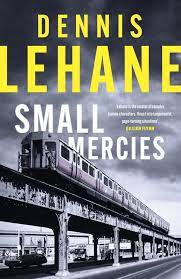
Small Mercies, by Dennis Lehane.


It is Summer, 1974.  In Boston, Massachusetts, a judge has just decreed that public high schools be desegregated:  black teenagers will travel by bus to white high schools – but only in the poorer areas.  Prosperous suburbs with private schools will be exempt.  In the predominantly poor Irish district of Southie racism is rearing its ugly head:  if the rich want desegregation, let them bus all the niggers to their own schools!  The mood is ugly, and there have already been demonstrations, engineered by the local criminals;  they don’t want competition from any nigger gangs on their turf.  The atmosphere is explosive, and the weather is not helping.  Everyone is feeling the heat, not least the mayor, the judicial system, and the police:  something will have to give.

Mary Pat Fennessy is a hard woman – hard-faced, hard to like, and hard-done-by in her personal circumstances:  her first husband, father of her children and a small-time criminal, died in suspicious circumstances;  her beloved son succumbed to heroin’s charms and died as a result;  her second husband Ken has recently left her, and her cherished remaining child, 17 year-old Jules, didn’t come home last night. And a young black man has been found dead overnight in Southie, too, and the police are making a lot of enquires.

 Jules’ mutton-headed boyfriend Rum says that he hasn’t seen her and left her to walk home by herself.  Oh, really?  Rum is unprepared for Mary Pat’s ‘physicality’ when Mary Pat tracks him down, for Mary Pat is a dirty fighter whose main advantage is surprise – surprise and shock that a little woman could turn herself into a bone-breaker, and in Rum’s case, a testicle-cutter – not fatal, you understand, but so painful and bloody that Rum begs the investigating police to keep him in a cell so that she can’t get him – and in return he’ll tell them what he and Jules did on their last date.

Dennis Lehane doesn’t let the reader move an inch away from the page as he holds us all in a stranglehold of suspense, first as to Jules’ fate, then the nature of Mary Pat’s terrible revenge.  And hubble-bubbling away like a dirty underground stream throughout this explosive and powerful story is the racism that never goes away, never changes, and certainly never disappears, even though fifty years have passed.  This was a hard book to read, (including all the f-bombs!) hard because of all the uncomfortable truths that it exposes, especially about how we, as children, are taught to hate:  this is a great book.  SIX STARS.   

Saturday, 9 September 2023


After That Night, by Karin Slaughter.


I’ve done it again:  started reading a series at the end instead of the beginning, to my eternal shame.  Ms Slaughter’s latest book is advertised as a Will Trent thriller and I thought ‘no problem – there will be a backstory’.  And there is, but so many Will Trent novels have preceded this one, with so many truly great permanent characters, that I spent most of the time while I read trying to figure out relationships, friendships and families, and my lasting regret is that I’ve missed out (unless I trawl through the Will Trent Canon, and will I live that long?) on a continuing story that embodies perfectly the thriller genre.  Even though I’m lacking in previous details, especially concerning Will Trent’s early life, I’m so fortunate to finally meet him.  Better late than never!

            GBI special agent Will Trent is engaged to Sara Linton, a brilliant Doctor who is working in the Emergency Department of an Atlanta hospital.  They are planning their wedding in a month’s time and both are thrilled to be starting their new life together, until a young woman is brought into the E.D. in terrible condition.  She has driven a late-model Mercedes very gently into an ambulance parked outside the hospital, then collapsed.  Her injuries are horrific and eventually fatal despite everyone’s efforts, but it is also obvious that she has been brutally raped.  Which awakens terrible memories for Sara:  fifteen years ago, the same terrible, animal thing happened to her, and after that night, nothing in her life would ever be the same, including injuries so bad she can never have children.

            But that’s not all.  An investigation turns up cold cases, rapes and fatalities that remain unsolved, all involving young women of approximately the same age, usually students – with the same knife-markings on certain  parts of their bodies – and always missing a left shoe:  the cases are all connected, but actual evidence is thin on the ground, until Sara and Will piece together fragile clues linking her assault and the dying girl with the Mercedes, all linking however tenuously to a group of her fellow medical students, now prosperous specialists, trailblazers in medicine and powerful men in their own right – but spectacular failures in their personal lives.  They took the Hippocratic Oath:  they pledged to do no harm.  They couldn’t be mixed up in this sadistic cruelty:  could they?

            Ms Slaughter leads us competently through the story, never letting the reader up on the suspense and examining sometimes minutely the sacrifices that people (particularly parents) will make for those they love – and those they don’t:  think medical staff and police.  As always she gives us HEAPS to think about – and regret:  wish I’d read all the backstories!  FIVE STARS.    


Wednesday, 30 August 2023

Pet, by Catherine Chidgey.


    Catherine Chidgey proves that the acclamation earned by ‘The Axeman’s Carnival’ and her earlier novels was fully justified.  Her boundless imagination and dazzling skill at creating characters that are all too horrifyingly credible is beautifully realised in the story which opens in 2014 when Justine Crieve is visiting her father in Dementia care:  the new carer who is helping her father looks just like someone from her childhood that she would rather forget, generating harsh memories of a class of 12 year-old children who happily come under the sway of their new teacher, Mrs Price.

            Mrs Price is almost impossibly glamorous.  She drives a white left-hand drive Corvette (it only has two seats – how exciting is that!), wears the latest fashions, calls everyone darling, and generally captivates all (except the overweight mums, who are inclined to mutter nasty asides to each other about her not being all that she should be), and she goes to Sunday Mass as a teacher at a Wellington Catholic school should.  There are rumours that she has been the victim of a tragedy;  her husband and little daughter died in a car accident in Auckland, but no-one wants to ask her any questions – who would want to resurrect such sorrow?  Regardless, every child in her class wants to be her ‘Pet’, that exalted, favoured position whereby certain children are allowed to clean the blackboard and dusters after school, tidy the stationery cupboard, dish out papers to the mere mortals, and generally bask in the warmth and outright favouritism of being Special.

            Justine Crieve and her best friend Amy Fong would both love to be Pets, but know it will never happen:  Justine has seizures and her Mum died of breast cancer a year ago.  Her dad isn’t managing at all well and is drinking a lot.  Amy is Chinese;  her family owns the fruit and veg shop, but much as they try they’re not fitting in;  instead both girls imitate (unkindly) the Pets.

            Until Justine is brought home by Mrs Price after a seizure, and the two adults find they have much in common, including prior tragedies.  And it’s not long before Justine becomes a Pet – at the expense of her friendship with Amy, who thinks Mrs Price is a thief:  she saw her pinch Jasmine Tea from her parents’ shop!  And what about all the stuff missing from the classroom since Mrs Price started?  Justine refuses to hear anything nasty about her heroine, for Mrs Price and her father are getting married – and taking her on their honeymoon!  Amy can go and get forgotten about.

            Catherine Chidgey has created a thriller which has more twists and turns than a pretzel, all of them clever and unexpected.  And tragic.  The sadness doesn’t end, right down to the last word.  FIVE STARS.       

Sunday, 20 August 2023


Fatherland, by Burkhard Bilger.                       Non-fiction.  Memoir.


Burkhard Bilger is a respected writer for The New Yorker, and has contributed many times to other publications – The Atlantic, Harper’s and the New York Times among them.  Born in Oklahoma, he is also of German ancestry;  his parents emigrated to the USA after the Second World War.  Bilger Senior was a Physicist and his mother was a schoolteacher who eventually returned to university to qualify as a historian:  life was full of promise – the American Dream was possible for all in the sixties in Oklahoma (provided your skin was white.)

            But Burkhard wasn’t so much concerned with skin colour eventually, as much as the gaps in his parents’ reminiscences of their early lives in the Germany of the War years spent in the Schwarzwald, the Black Forest near the southern border of France and the Swiss border:  there was, among the fairy-tale sounding stories of Wurst und Speck and snow up to the eaves in winter, absolutely no mention of the War, or the fact that Burkhard’s mother’s father, his grandfather, was a longtime member of the Nazi party, and Nazi Chief representative in Bartenheim, a small southern village on the Rhine.   Originally a school teacher, Grandfather Karl Gönner embraced as did so many others, the new prosperity promised by Hitler.  After so many years of poverty and inflation when Germany and its remaining wealth was parcelled out to others in the infamous Treaty of Versailles, it was now time to take back what had been stolen.  It was time for the ascension of The Third Reich:  Sieg Heil!

            Bartenheim during the war years was, as always, an uncomfortable mixture of die-hard French inhabitants, and equally intransigent Deutsche counterparts – which was nothing new, for every time the two countries went to war, the victor always determined which language took precedence all along the French/German border, only this time the Nazi troops were much more trigger-happy, more ruthless in fact, than in previous times. Which meant that there were a lot more informers and turncoats all ready to turn someone in for money – or spite.  Grandfather Karl, in his capacity of local headmaster but ultimately Chief Nazi Officer of the area, turned out to be fair game for those local politicos with a grudge once the tide of victory had turned – and there were many.  He was sent to prison at the end of the war.

            His grandson Burkhard’s sterling efforts on several trips to Germany to peel back the layers of history to get at the plain, unvarnished truth;  his hours, weeks and months of research, delving through archives miraculously still available, and all the heart-rending  personal interviews have produced a beautifully written family history, a deeply affecting account of a nation’s guilt, shame and redemption – and the posing of the worrisome question in the wake of today’s world situation:  have we learnt anything at all?  FIVE STARS.   

Friday, 11 August 2023


Yellowface, by Rebecca F. Kuang.


          With the exception of the author, only those in the Publishing industry are fully aware of the enormous amount of effort that is expended to produce a novel , let alone a best-seller:  the eventual reader – the Mark – is blissfully ignorant of the fact that so many have laboured for so long to bring life to a story that will absorb and enchant, that he will line up to buy – until the next Blockbuster.  Rebecca Kuang enlightens us all with her brutal, brilliant warts-and-all portrayal of the industry and Social Media, how it can uplift and deify some writers (particularly after they die) and completely bury others just as good:  Death by Twitter.

            Juniper Song Hayward is a white Yale graduate whose mother named her child in her Hippie days.  She is friends with Athena Liu, a Chinese American who has it all:  gorgeous looks, a slender model’s figure and a writing talent that has already propelled her onto the Bestseller lists.  June is a writer who has already been published, but her autobiographical novel ‘Over the Sycamore’ sank without trace months after publication;  now she’s inclined to think that Athena’s looks have aided her as much as her way with words;  that luck has had a huge amount to do with Athena’s success and, even though it’s hard to admit, perhaps Junie is just gut-churningly jealous.  Not of Athena’s writing!  No, June has enough confidence in her talent to know how good she is, she just hadn’t had the luck.

            Until one night a horrible, freak accident occurs at Athena’s apartment resulting in Athena’s death, and June becomes the custodian of her friend’s last rough manuscript, a potentially brilliant story of Chinese indentured labourers sent to France by Britain during the First World War. No-one knows of this work except June, and after a huge amount of work transcribing and rewriting, June presents the work as her own to her agent. With predictable results.  The Publishing world is taken by storm, she is the new Flavour of the Month, and she is on the Bestseller lists at last.

            Until AthenaLiu’sGhost pops up casting aspersions on Twitter, and bona fide Asian writers want to know how a white woman could trick everyone with her name – Juniper Song – then write of Chinese history with such convincing authority.  June has reached the summit, now it’s all downhill.

            Rebecca Kuang takes no prisoners in her portrayal of Yellowface racism in the publishing industry:  ‘Sorry, we won’t publish that because the author’s Asian and we already have an Asian writer’ and with regard to Athena and her supposed success, they only wanted books from her on an Asian theme.  She was their token Asian author.  Well, Kuang has turned the tables on them, writing as a white woman trying to plagiarise her Asian friend’s work.  This story is as much an exposé of racism in the publishing industry as it is in society.  To our shame.  FOUR STARS.      

Wednesday, 2 August 2023


The Art of Prophecy, by Wesley Chu.


         This is the first of Wesley Chu’s fantasy martial arts series involving Wen Jian, destined as a child to fulfil the ancient prophesy of his people:  to vanquish and destroy the Eternal Khan and the hordes of Katuia, enemies of the sacred Kingdom.  To all intents and purposes, it should be a pretty straightforward battle between Good and Evil – you know:  the usual villains encountered in odd places;  a touch of the supernatural to push the story along, and an eventual happy ending – at the end of the series, naturally.

            Instead, we have a visit by Ling Taishi, War Artist Grandmaster appointed by the five Dukes who run the country,  to Wen Jian’s luxurious palace where he resides in splendour and comfort with all his War Arts tutors;  she will assess his progress, not just in combat, but formal education and court etiquette.  His education must be complete if he is to rule according to the prophecy.  In a perfect world.

            Instead, she finds a spoilt brat, confused by too many cooks spoiling the broth and barely able to recognise the characters of his own name.  And it doesn’t take long for the Dukes to start questioning the prophecy and its veracity – and the fact that they can govern the country extremely well without an upstart boy who knows nothing – or won’t for some considerable time.  Wen Jian must die.  Very discreetly, of course, for the country’s religion has been founded on his existence.  Fortunately for Jian, Taishi takes pity on him, not least because of her War Arts principles, but because it is unthinkable for her to aid in the death of a potential God-child.  She and Jian escape death thanks to her Grandmaster expertise and secret contacts among old lovers and friends:  Jian is hidden in a War Arts school as a kitchen boy and novice pupil, and Taishi goes on the run – the Dukes have put huge prices on their heads and if they want those heads to stay on their respective shoulders, then this is the only solution.

            Wesley Chu’s writing is a bit rough around the edges;  I can’t see him winning a Pulitzer anytime soon, but what a fantastic storyteller he is!  His villains are enjoyably nasty – especially Qisami, a manic bounty-hunter, the opposite to Salminde, highly principled Viperstrike of the Katuia who is horrified and furious to learn of the betrayal of her people by their leadership:  both these women warriors want Jian’s death – Qisami for the bounty, and Salminde for the destruction of an enemy Icon.  They will have to get past Taishi first. And what a stunning cover!  Hurry up, Book Two.  FOUR STARS.      


Friday, 21 July 2023


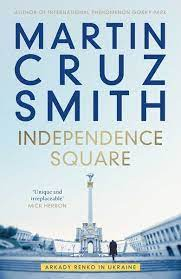
Independence Square by Martin Cruz Smith.


            Senior Moscow Police Investigator Arkady Renko is tired.  Tired of his job, tired of the endless corruption he deals with at every turn, and very definitely tired of his boss Zorin, who has made an art out of toadying and feathering his own nest to the extent that he is virtually untouchable – as are most of the Would-Be’s if they Could-Be’s scrabbling to be on the various strata of the Kremlin.

            And he also knows that those he holds dear are never really safe;  they will always be vulnerable, always be potential victims as long as he remains honourable and a straight arrow:  his foster son Zenhya, and his long-time love, fearless international journalist Tatiana (now writing for the New York Times) who, as always has left Moscow on the trail of a sizzling exposé of Putin’s plans for war in the Ukraine.  No, he’s not flavour of the month with the Kremlin, but he has to soldier on, as they all do, accepting as a distraction a request from ‘Bronson’, so-called because that’s who he looks like, to find his daughter Karina, a classical musician and first violin of a string-quartet ‘because the assholes he hired to find her haven’t gotten anywhere.’  Could Renko investigate?

            It is ironic to think that Bronson, who runs most of the protection rackets in the city and has been jailed multiple times wants to hire the only incorruptible investigator in Moscow, but stranger things have happened – we just don’t know what they are yet.  So, Arkady and his loyal sidekick Viktor (every detective has one!) start with Karina’s apartment, which she shares with her friend Elena, also a member of the quartet.  Nothing is revealed except that both women are followers of Forum, a new and noisy political group whose leader is Leonid Lebedev who, at a rally Arkady attends announces that he is going to run for Mayor of Moscow – oh, really?  Good luck with that, thinks Renko.  And as the story develops and Arkady and Elena search for Karina farther afield, the body count starts to rise, beginning with the would-be mayoral candidate, and a naïve friend of Arkady’s foster son.  Will Zenhya be next?

            The bodies keep falling, and Arkady’s investigative powers are compromised by an unexpected illness – he is diagnosed with Parkinson’s Disease before he leaves Moscow for the Crimea and a meeting with the elusive Karina.  And this is not a touch of melodrama for the sake of it:  Smith was diagnosed with the same disease and knows only too well whereof he speaks.  Regardless, he can still ramp up the suspense and heartbreak with the best of them, and his portrayal of contemporary events is fair and true, just like his mighty, world-weary protagonist.  FIVE STARS.